


 077 900 32 32
Why multitasking is a myth
 Creation date
31.03.2025
Creation date
31.03.2025
Replying to messages, working on a task, and planning your evening — all at once. Sound familiar? At Club32, we ask whether we are truly doing everything simultaneously or constantly switching our attention. Dentistry offers an interesting perspective: many different actions serve a single goal.
In this article, we reflect on concentration, switching between tasks, and the habit of expecting ourselves to do everything at once. Read on for a different perspective on multitasking and your own expectations of a productive day.
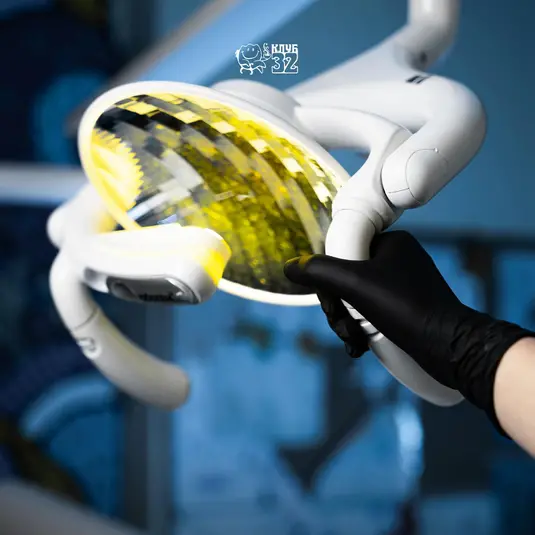
Why multitasking is not what it seems
We have 32 teeth and 3 kinds of attention. The existence of two of them is a medical fact. No more than a hundred people on the planet know how to use the third. These are true masters of martial arts. Real multitasking works only there. Of course, they have not been studied, and therefore the brain areas that activate the third attention have not yet been identified.
It shows itself, for example, during a fight with several opponents. Imagine: the master «works» on one opponent and simultaneously watches all the others, and at the same time chooses with whom the next interaction will be most effective and what form it will take - defense or attack.
That means three information processes are handled simultaneously.
The rest of people cannot do that. We can actually perceive the background, that is, the second attention, and highlight one object within it, that is, the first attention.
The object can also be a task.
We know how to invest all our knowledge and skills into the first attention.
For example, a doctor works with a carious tooth. The bur is small, and the tooth is small as well. Accuracy of movement, fine motor skills, interaction with an assistant, speech activity, online analysis of changes in the environment - so as not to remove excess tissue.
All this is one large information cluster. And everything works perfectly. But the rest of the world simply disappears at that moment. And that is normal. That is exactly how it should be.
Of course, after the task is completed with the expected result, it can easily be unloaded from the neurons or transferred into long-term memory.
And then the first attention can be switched to a completely different task, perhaps not even a medical one, and another information cluster can be launched on the neurons. This is sequential task performance, and we are good at it.
But demanding multitasking from yourself or from others is a direct path to neurosis.
Take care of yourself. Do everything consistently.
Special offer
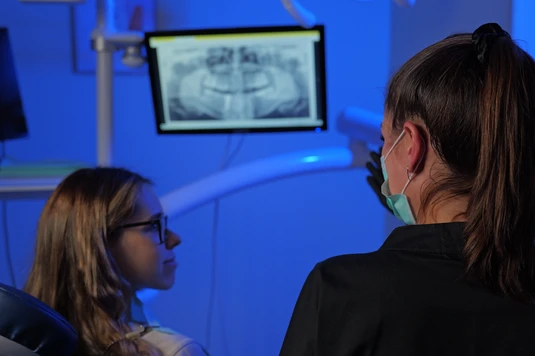 -10%
-10%
Support for Internally Displaced Persons
The war has forced thousands of people to leave their homes in search of safety. At Club 32, we understand how important it is to support those facing such difficult circumstances. To assist internally displaced persons, our clinic offers special terms for receiving quality dental care.
We want every patient to be able to take timely care of their dental health during this difficult period. Further details about the program and eligibility requirements are available from our clinic administrators when booking an appointment.
Sign up for a consultation Read more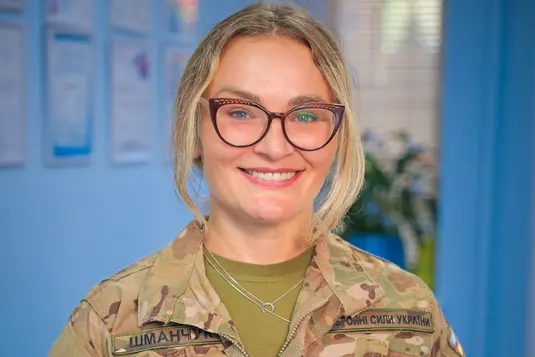 -30%
-30%
Treatment for Military Personnel
The war in Ukraine continues, and each of us understands how important it is to support those who defend our country. Club 32 Dental Clinic sincerely thanks all service members for their courage, selflessness, and unbreakable spirit. We understand that access to quality medical care, including dental care, is an essential part of maintaining good health. That is why our clinic has developed special support programs for the defenders of Ukraine.
We stand with you.
Pictured is Maryna Shmanchuk, a servicewoman in the Armed Forces of Ukraine.
Sign up for a consultation Read more