Braces: everything you need to know about traditional teeth straightening
Braces are no longer the only, but still the most popular and affordable method of teeth straightening. What's more, there are situations in which bite correction is only possible with their help.
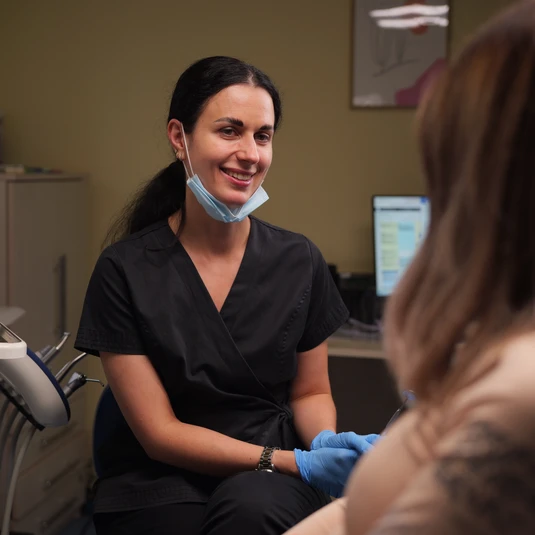
The orthodontists at «Club 32», a family dental clinic in the Holosiivskyi district of Kyiv, have many successful cases of bite correction using various braces systems for patients of all ages in their portfolio.
We offer an individual approach to each patient, creating a treatment plan that fully corresponds to your clinical situation and wishes. This allows us to achieve maximum comfort during treatment and long-lasting results.
Types of braces
Systems are distinguished by their placement:
- vestibular (on the outside of the jaw)
- lingual (on the inside)
The price of vestibular systems is lower, but they are attached to the front of the teeth and are therefore clearly visible. Lingual braces are more expensive, but completely invisible. They are more suitable for people in public professions, but there is a caveat - the installation of these braces reduces the space for tongue movement and therefore makes diction more difficult. So if your work involves public speaking, it would be better to choose a vestibular system – ceramic or sapphire. A combined option is also possible, in which different braces are placed on the two jaws – lingual on the upper jaw and aesthetic vestibular on the lower jaw.
Vestibular braces are divided into:
- ligature
- self-ligating (ligature-free)
The name of both systems comes from the word «ligature» – a fastener (rubber ring, less often thin metal wire) used to secure the archwire.
Advantages of ligature systems:
- simplicity
- efficiency
- price
Disadvantages:
- bulkiness
- difficulty adapting at the initial stage of treatment
- need for monthly visits to the doctor to replace ligatures
Self-ligating – a more advanced type of system, with special locks that secure the archwire.
Advantages of self-ligating systems:
- Less friction between the archwire and the bracket
- Fewer visits to the orthodontist
- Easier to maintain oral hygiene
- Less discomfort
- Better appearance on teeth
Disadvantages:
- More expensive
- Fewer options for precise correction
- Do not always reduce treatment time
Lingual systems (attached to the inner side of the teeth) are divided into:
The price of standard systems is naturally lower, but they can be complicated. For example, at «Club 32», there have been cases where, after treatment with such systems, the bite had to be refined with vestibular systems.
Customized lingual systems work much better, but their cost can reach up to €6,000. This is comparable to treatment with Invisalign aligners. And if the clinical picture allows, we recommend this option.
If the patient still decides to install such a brace system, in Kyiv (at our clinic) we take impressions of the jaw and send them to Germany, from where we receive a system specially made for the specific case.
Regardless of the type of system you choose, you will need to adhere to certain restrictions. For example, you will need to completely eliminate crackers, brittle candies, and other very hard foods from your diet. In addition, you will need to brush your teeth not twice a day, but after every meal.
Indications and contraindications for braces
Indications:
- Severe crowding of teeth - teeth are too close together and may overlap
- Wide gaps between teeth - there are noticeable spaces between the teeth
- Deep bite - the upper teeth overlap the lower teeth excessively when the mouth is closed
- Open bite - there is a gap between the upper and lower teeth when closing the mouth
- Crossbite - the teeth of the upper and lower jaws do not close properly on the sides
- Distal bite - the upper jaw protrudes forward relative to the lower jaw
- Mesial bite - the lower jaw protrudes forward relative to the upper jaw
- Malocclusion of individual teeth - one or more teeth are displaced from the dental arch
- Congenital malocclusion - abnormalities in the development of the bite that formed before birth
- Impacted or partially erupted teeth - teeth that have not fully or partially erupted and remain in the bone or gum
- Preparation for implantation or prosthetics - orthodontic treatment necessary for the correct placement of prostheses or implants
Contraindications
Absolute - conditions in which orthodontic treatment is completely contraindicated until the cause is eliminated:
- Severe systemic diseases
- Uncontrolled diabetes
- Malignant neoplasms
- Autoimmune diseases in the active phase (SLE, vasculitis)
- Decompensated cardiovascular diseases
- Mental disorders that make it impossible to cooperate with a doctor
- Acute forms of schizophrenia
- Severe cognitive impairment
- Mental instability, aggression, fear of contact
- Allergy to metal or system components
- If it is impossible to find alternative materials (e.g., sapphire braces or titanium arches)
- Lack of hygiene skills / refusal to maintain hygiene
- If the patient is fundamentally unwilling to brush their teeth 2-3 times a day
In this case, braces can lead to tooth decay and periodontitis.
Relative conditions that need to be treated before installing braces:
- Tooth decay and gum inflammation (gingivitis, periodontitis) Complete oral sanitation is necessary. Only after this can braces be installed
Bad habits:
- Frequent chewing on objects, nail biting
- Habit of sticking out the tongue or biting the lip. These habits must be corrected before treatment
Severe bone tissue deficiency:
- In cases of severe alveolar ridge atrophy (especially in adults)
- Sometimes bone augmentation or a special treatment plan is required
- Presence of implants or fixed dentures
- Not a contraindication, but limits tooth mobility
- The treatment plan must be adjusted by an orthopedist
Pregnancy:
- Not a direct contraindication, but it is not advisable to start active treatment
- Hormonal changes can affect the gums and bone tissue
Age up to 6–7 years:
- At this age, early intervention appliances are installed
Pain intolerance / anxiety disorders:
- Patients with increased sensitivity should receive psychological or medication support
How braces are fitted
Initial consultation and photo protocol
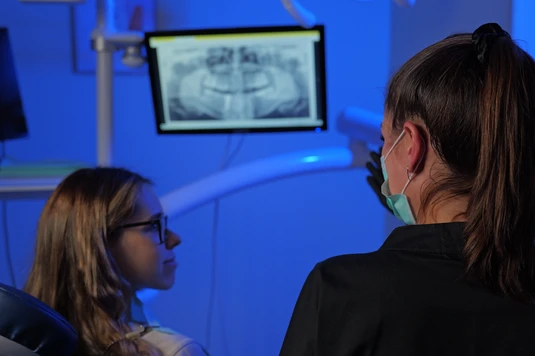
The orthodontist conducts an examination, takes photos, and proposes a preliminary plan.
Treatment plan
We agree on the type of braces and the system itself. We determine whether the system will be installed on one or both jaws and how long the treatment will last. At this stage, the cost of installing the braces is also determined.
Oral cavity preparation
Before installation, it is important to eliminate caries and inflammation and perform cleaning.
Installation
The procedure takes 1–2 hours. Brackets are attached to the teeth, through which an archwire is passed, setting the direction of tooth movement.
Regular visits
Corrections are made every 4–6 weeks.
Removal of the system and retention
Once the desired result has been achieved, a retainer is fitted or aligners are prescribed.
Turnkey braces installation is a comprehensive service that includes all of the above steps. At «Club 32», we prefer this approach to treatment. Because only this approach guarantees transparent pricing and maximum comfort for the patient.
Advantages of installing braces at «Club 32»:
- Experienced orthodontists who work with children, teenagers, and adults;
- Turnkey braces installation, including diagnosis, treatment plan, and retention period;
- A cozy atmosphere and patient care at all stages;
- Convenient location - on the right bank, near the metro;
- Transparent pricing for braces and flexible payment options
If you are choosing where to get braces in Kyiv so that the price and quality meet your expectations, welcome to «Club 32».
Take the first step towards a healthy and beautiful smile.
Book a consultation now!
📞 (067) 382 32 32 ( 👉 Viber, 👉 WhatsApp, 👉 Telegram )
📍 Address: Kyiv, Stepana Rudnytskoho St 15, building 3
Instagram: instagram.com/club32.ua
Facebook: facebook.com/club32.ua



 077 900 32 32