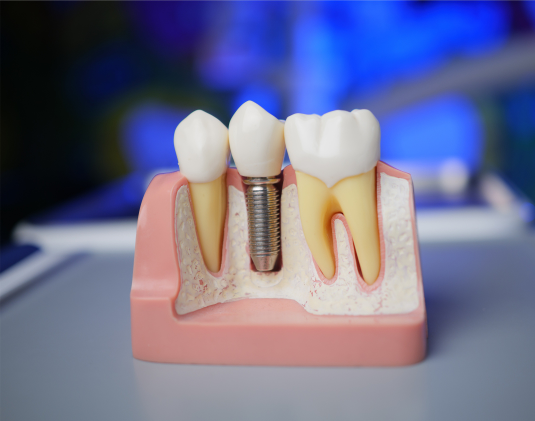
Dental prosthetics on implants – a reliable and long-lasting solution
Modern prostheses on implants (implantates) are the best way to restore lost teeth. Unlike outdated prosthetic methods – bridges or removable structures – the installation of dental prostheses on implants provides maximum stability, reliability, and comfort.
Implants not only restore the aesthetics of your smile, but also preserve the health of your jawbone by preventing its atrophy. This makes implant prosthetics the best option for patients who want to regain their natural chewing function and self-confidence.
Club 32, a family dental clinic in the Holosiivskyi district of Kyiv, offers a full range of implant prosthetics services for patients of all ages.
Types of implant prostheses
Modern dentistry offers two main types of dental prosthetics using implants:
Fixed dental prostheses on implants
These structures are installed on implants and remain in the oral cavity on a permanent basis. They do not need to be removed, provide maximum comfort, and feel like your own teeth.
Popular types of fixed prosthetics:
- Implant-supported crowns – made of ceramic, zirconium, or metal-ceramic
- Bridge prostheses – used when several teeth are missing
- Full prosthetics using the All-on-4 and All-on-6 systems – a technique that allows the entire lower jaw to be restored on 4 implants or the entire upper jaw on 6 implants
A greater number of implants are required on the upper jaw for two reasons:
- The maxillary bone is more porous
- The force of gravity constantly acting on the upper prosthesis requires additional compensation
Removable prostheses on implants
Removable structures are fixed to implants using special locks (locators). They can be easily removed by the patient, but remain firmly in place during chewing and talking.
When are removable dentures chosen?
- If the patient does not have enough bone tissue for a fixed structure
- If a more budget-friendly solution is required
The price of dental prostheses on implants
The cost depends on several factors:
- The number of implants installed
- The material chosen for the crowns (zirconium, metal-ceramic, E-max)
- Type of construction – fixed dental implants or removable constructions
- The manufacturer of the implant system
The cost of implant prosthetics is calculated individually after consultation with a dentist.
Stages of installing dental prostheses on implants
Implant prosthetics is carried out in several stages:
- Initial consultation and diagnosis – the doctor conducts an examination and performs a CT scan to assess the condition of the bone tissue
- Implant placement – the surgical stage, performed under local anesthesia
- Osseointegration – the process of implant healing, which lasts 3–6 months
- Prosthetics – fabrication and fixation of a fixed or removable prosthesis
Modern methods minimize discomfort and speed up the rehabilitation process.
Contraindications to the installation of prostheses on implants
Absolute contraindications (implantation is not possible):
- Blood disorders (coagulation disorders, hemophilia, leukemia, etc.)
- Hepatitis
- Malignant neoplasms (oncological processes, chemotherapy or radiation therapy)
- Systemic diseases in the stage of decompensation (uncontrolled diabetes mellitus, severe cardiovascular diseases, diseases of the central nervous system, and autoimmune diseases)
- Venereal diseases
- Diseases of the skeletal system (severe forms of osteoporosis, osteomyelitis, Paget's disease, hyperparathyroidism, imperfect osteogenesis, hypophosphatasia)
- Mental disorders (may make it difficult for the patient to follow the rules for implant care)
- Alcoholism and drug addiction (negatively affect tissue healing and can lead to implant rejection)
- Intolerance or allergy to anesthesia
Relative contraindications (implantation is possible if certain conditions are met):
- Insufficient bone tissue volume – preliminary bone grafting may be required
- Uncontrolled diabetes – implantation is possible if blood sugar levels are stabilized
- Bruxism (teeth grinding during sleep) – may lead to implant overload, therefore protective mouth guards are used
- Inflammatory processes in the oral cavity – caries, gingivitis, periodontitis, and other diseases must be treated before implantation
- Smoking – nicotine slows down tissue healing, so patients are advised to quit smoking at least during the osseointegration period
Advantages of implant prosthetics:
- Reliability – implants last for more than 20 years
- Aesthetics – they look like natural teeth
- Functionality – they restore full chewing ability
- Prevention of bone atrophy – they preserve jaw health
- Comfort – dentures do not rub the gums and do not move
- Versatility – they can be used to install all types of dentures
Implant prosthetics are currently the best way to restore the functionality and beauty of your teeth.
Book a consultation now!
📞 (067) 382 32 32 ( 👉 Viber, 👉 WhatsUp, 👉 Telegram )
📍 Address: Kyiv, Stepana Rudnytskoho St 15, building 3
Instagram: instagram.com/club32.ua
Facebook: facebook.com/club32.ua